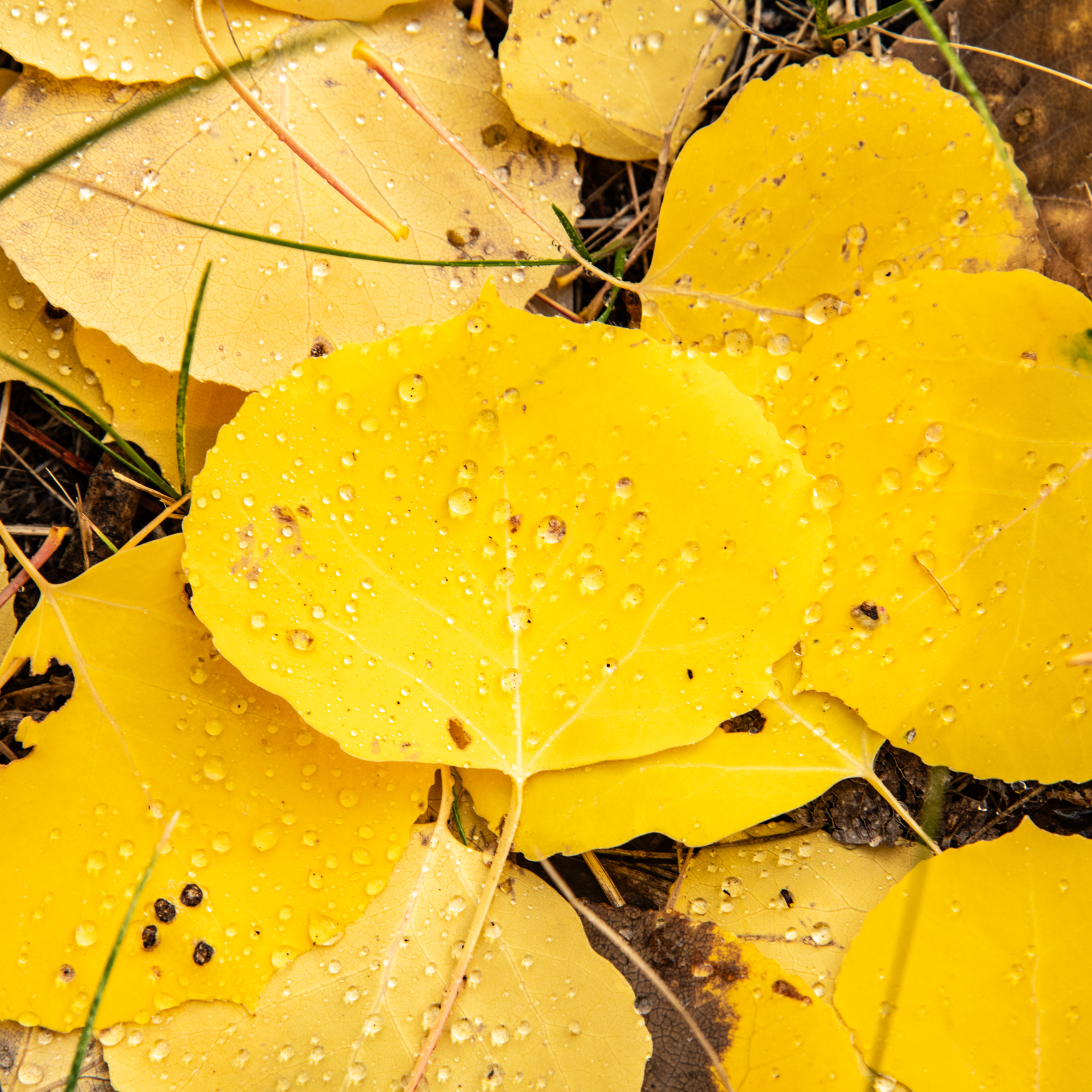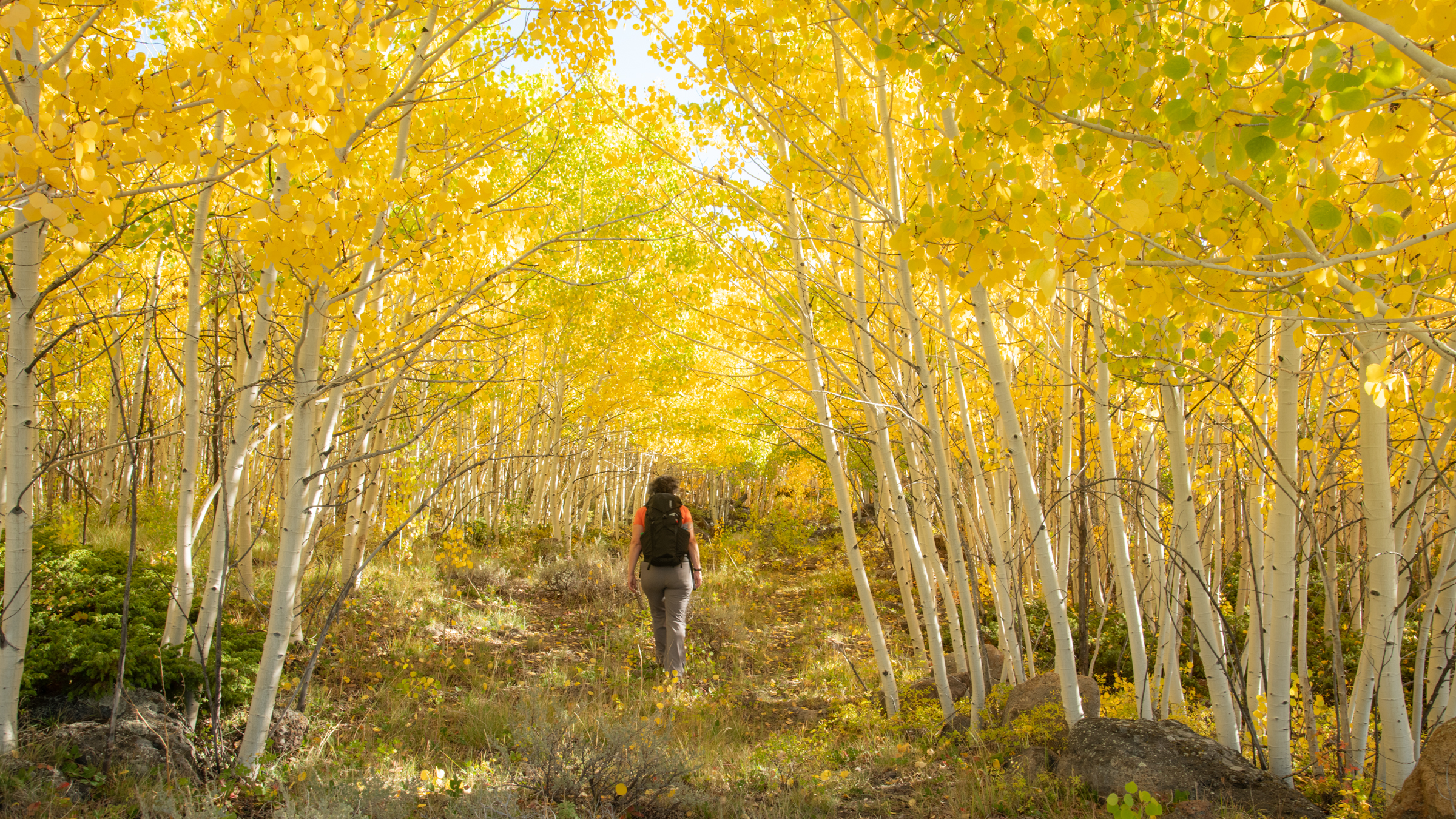
Imagine a tree that has been living for 9000 years – or more – that grows by sending new trunks up from its vast root network, year after year, century after century. It covers more than 100 acres, has more than a billion leaves that chatter in the wind and turn lemon yellow each autumn – and its soft white skin gives energy to the roots by photosynthesising through the winter.
This is the Pando tree. (Pando: ‘I spread’) It grows in Fishlake National Forest in Utah (USA), among other aspens, but this is the largest aspen clone ever identified: 47,000 trunks (or ‘ramets’) with the same DNA. It looks like an aspen forest – but once you know it’s a single tree, above and below ground, it feels different.
Being with Pando is a privilege. And being with Pando with the slowness, stillness and attentiveness that installation and poetry work demand has been a transformative experience. Somehow this tree invites new questions about time, connection, life and death, co-existence and care – not to mention how light behaves, and how to stay safe from bears!
LIGHT – COLOUR – TIME
Last year, we were invited by Friends of Pando and the Fishlake National Forest Service to be international artists in residence. Friends of Pando has been running a residency programme since 2022; and we are the first to come from outside the USA.
We had visited before – in 2019 – when we met the then head forester, Nick Mustoe, to learn more about this immense tree and its struggles – and stamina. We’ve stayed in touch with folk who care for this tree ever since, including Lance Oddit who established Friends of Pando (also in 2019) to gather volunteers to care for the tree, to map it, and to learn more about it.
Of course, we eagerly accepted the invitation. This gave us an incredible opportunity to get to know more about the tree, with the tree, from the tree.
For just under a week, we stayed within Pando. We wandered and we spent many hours sitting, with younger and older trunks, through the yellow leaf-light, and through the sun/rain/hail/cloud/starlight weather of autumn.
We arrived with a plan, 49 metres of cloth, a 2.5×2.5 poem canvas, our photography and drawing kits, and some sturdy shoes.
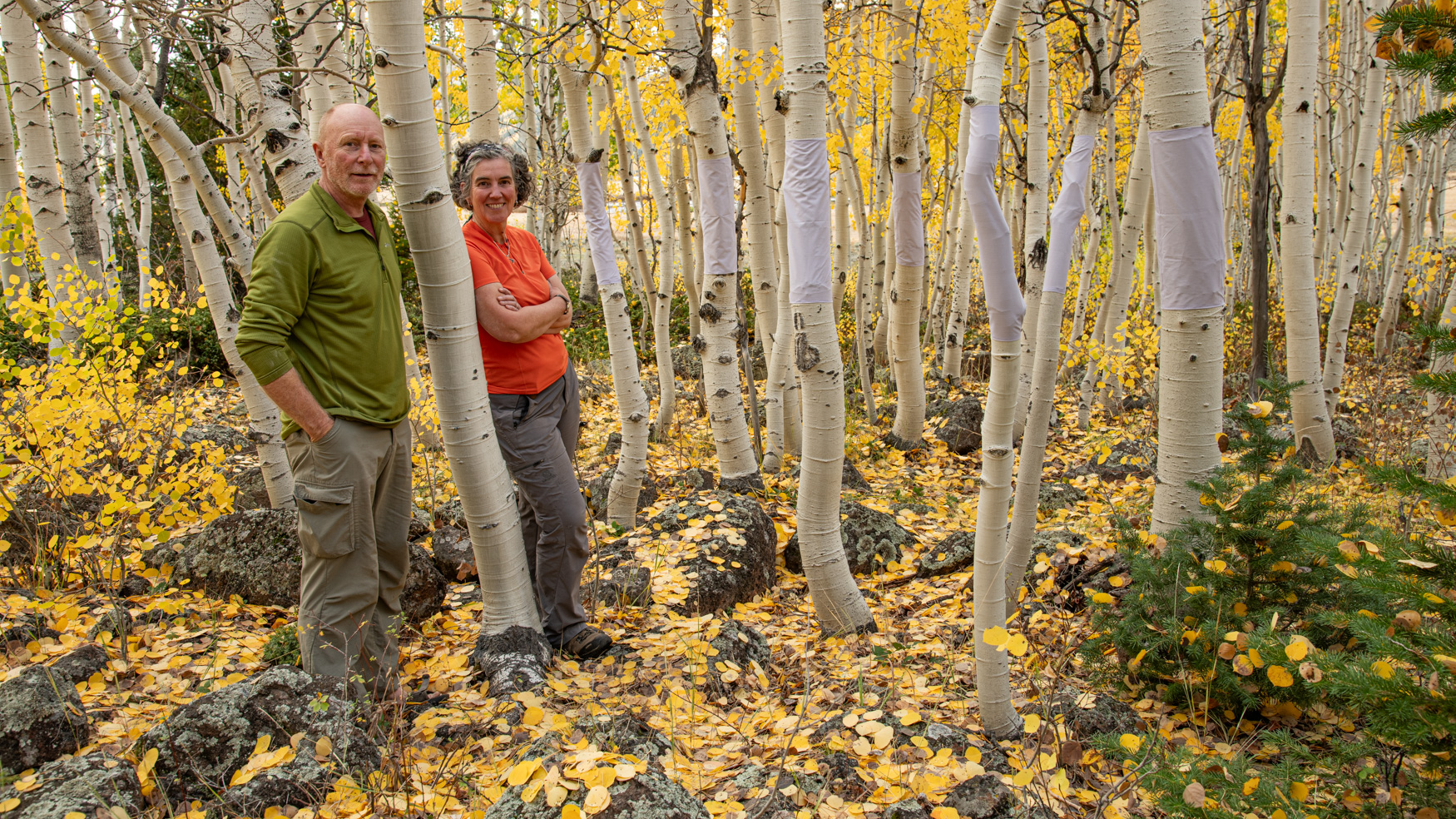
Loving the number seven as we do, we decided we would head into the tree to seek out seven sets of seven aspen stems, choosing seven locations within its 106-acre spread. In each site, we wrapped the stems in bands of cloth, embracing the seven colours of the rainbow, which are also linked with the energy centres of the body, through the Indian chakra system. This builds on our work with the seven colours in projects including The Long View and Resonance – it’s a theme that keeps nudging us towards new visual work, and new ways of contemplating our entwined relationship with land.
Rob’s seven large format real film images will be paired with poems written by Harriet & we’re in the process of composing seven short photo essays drawing on themes that arose as our encounters with the tree progressed: beauty, fragility, care, connection, time …
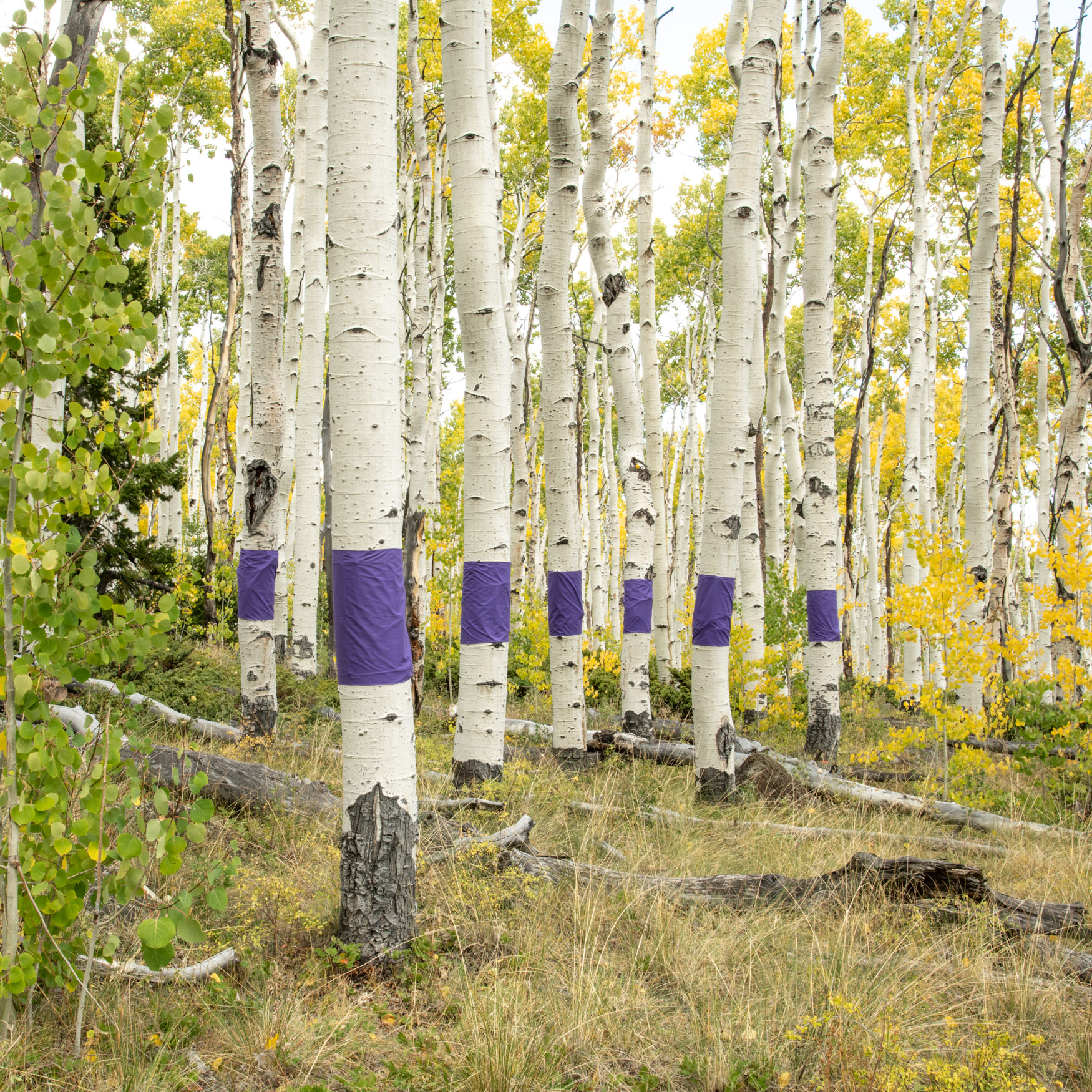
Pando: Purple
Pando: Purple
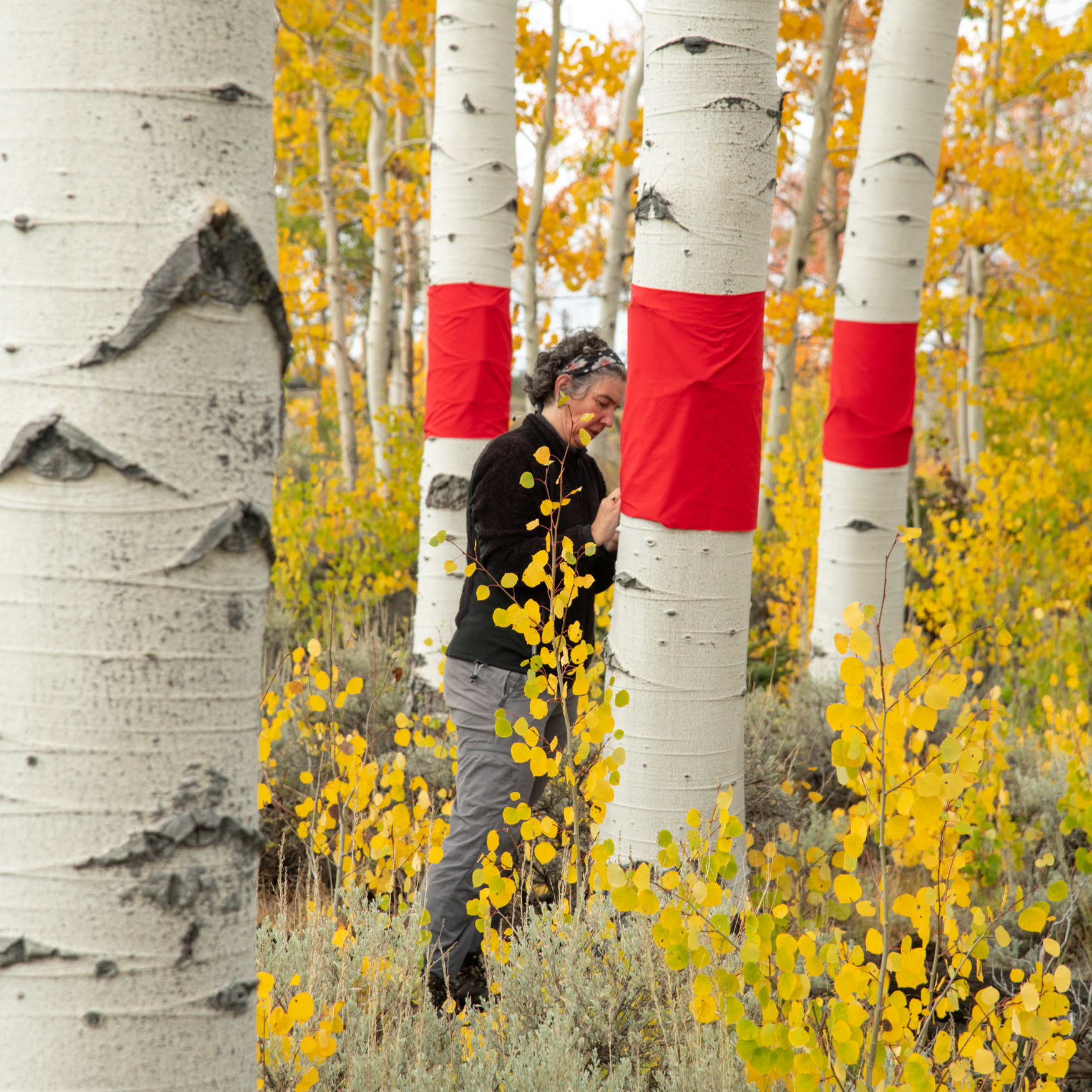
Pando: Red
Pando: Red
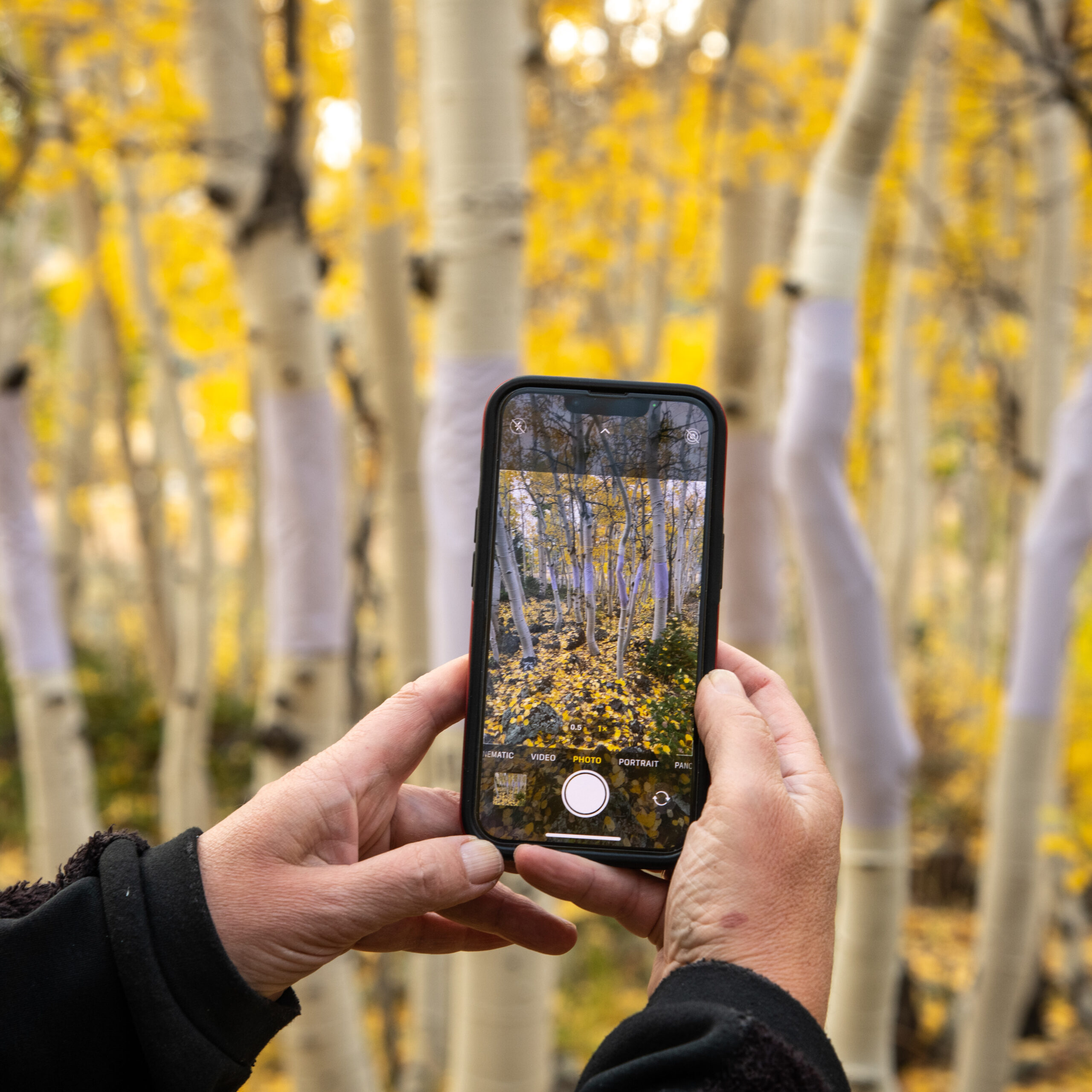
Capturing the final Pando installation - Violet
Capturing the final Pando installation - Violet
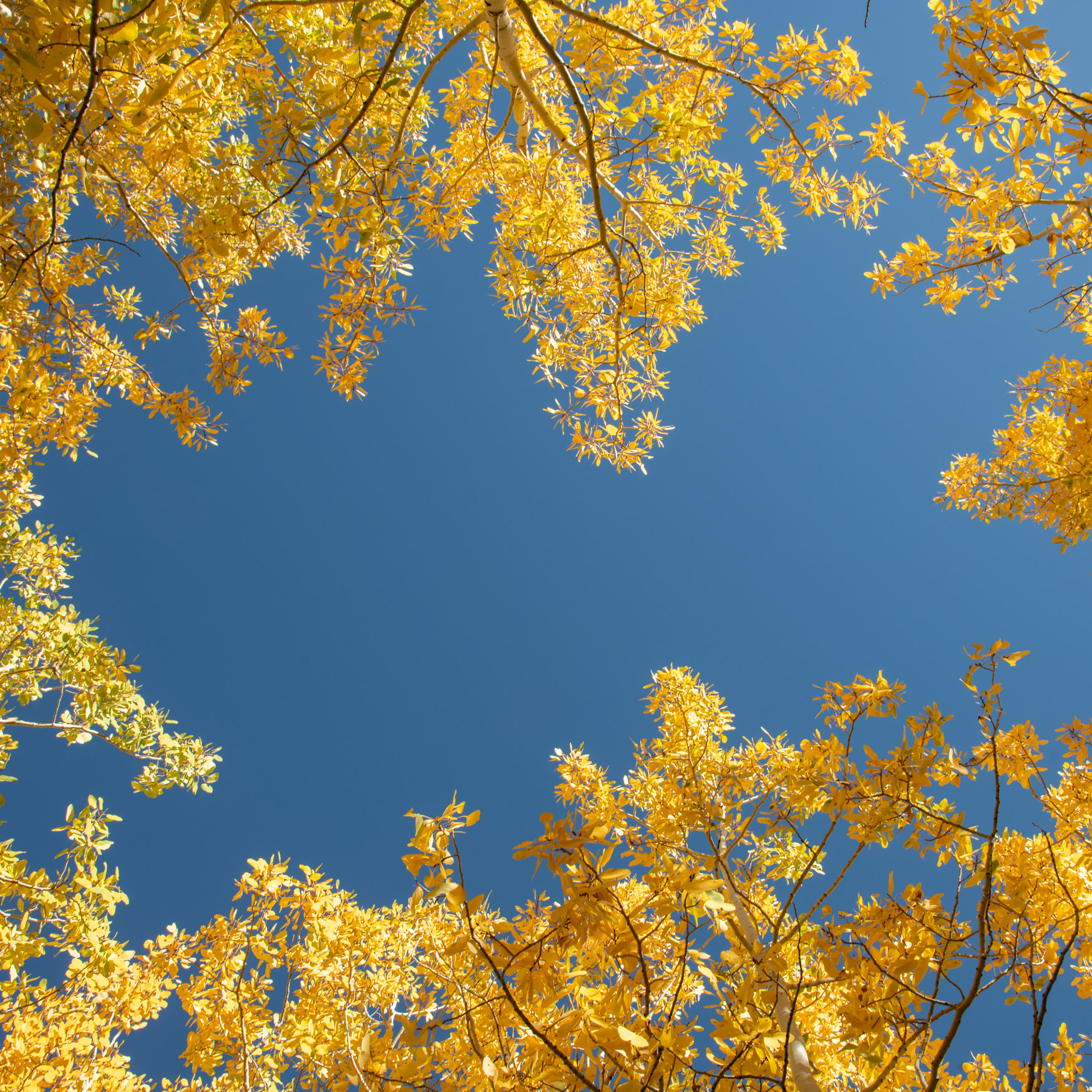
The golden leaves of Pando
The golden leaves of Pando
Art/ists in process
Finding the groups of stems was harder than we’d anticipated: we wanted to enter different parts of the tree, and this sometimes meant crossing steep boulder-covered ground. We were faced with thousands of stems, and although we needed to find only seven to wrap, it took a while – they needed to line up, stand out from the rest, be within reach, and fall into the camera’s focus range. The photographic view to give a sense of continuity between the seven needed a specific position – move an inch to one side or the other, and the effect is lost.
Each installation took us two to three hours, first to select the viewing point, and then to measure the girth of each stem – these ranged from 25 cm to 140cm. In each location, Harriet cut the cloth to size, then fixed the bands in place, then we made notes, audio & video recordings, and sat, to notice, and simply be with the tree. Fitting of the cloths meant a lot of tree hugging: a wonderful way to be with Pando, to feel the energy of the tree, and deepen our sense of it.
Because the intention was to use all seven colours, although each day involved the creation of a piece, and a collection of photographs, we didn’t actually finish until we’d wrapped the final colour: violet. This is the seventh or crown chakra, or energy point in the body, linked with thoughts, spirituality, imagination; but perhaps more than being an ending, it became an invitation. Here are some notes made by Harriet:
“With wind and rain on my face, looking up towards the canopy of the trees, I’m flushed with an incredible feeling of lightness, openness. Maybe in part from the completion of the piece, now that all seven installations are done, and feeling a balance of challenge and softness. It is as if the art/work is speaking back to us, demanding something of us, showing us something new. In the meeting of our intention with the tree’s participation, we become the receivers of the work.“
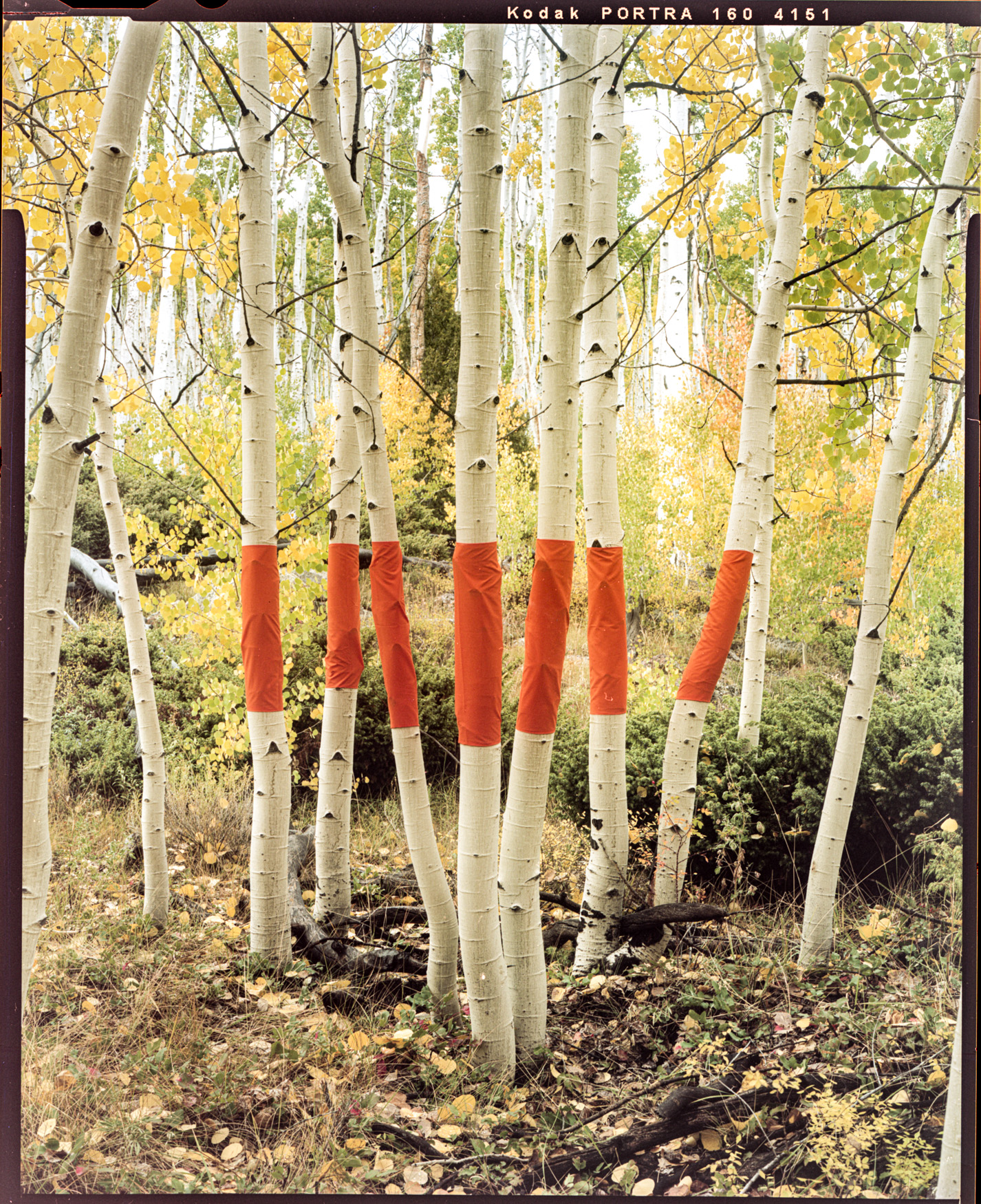
Pando : Orange
Pando : Orange
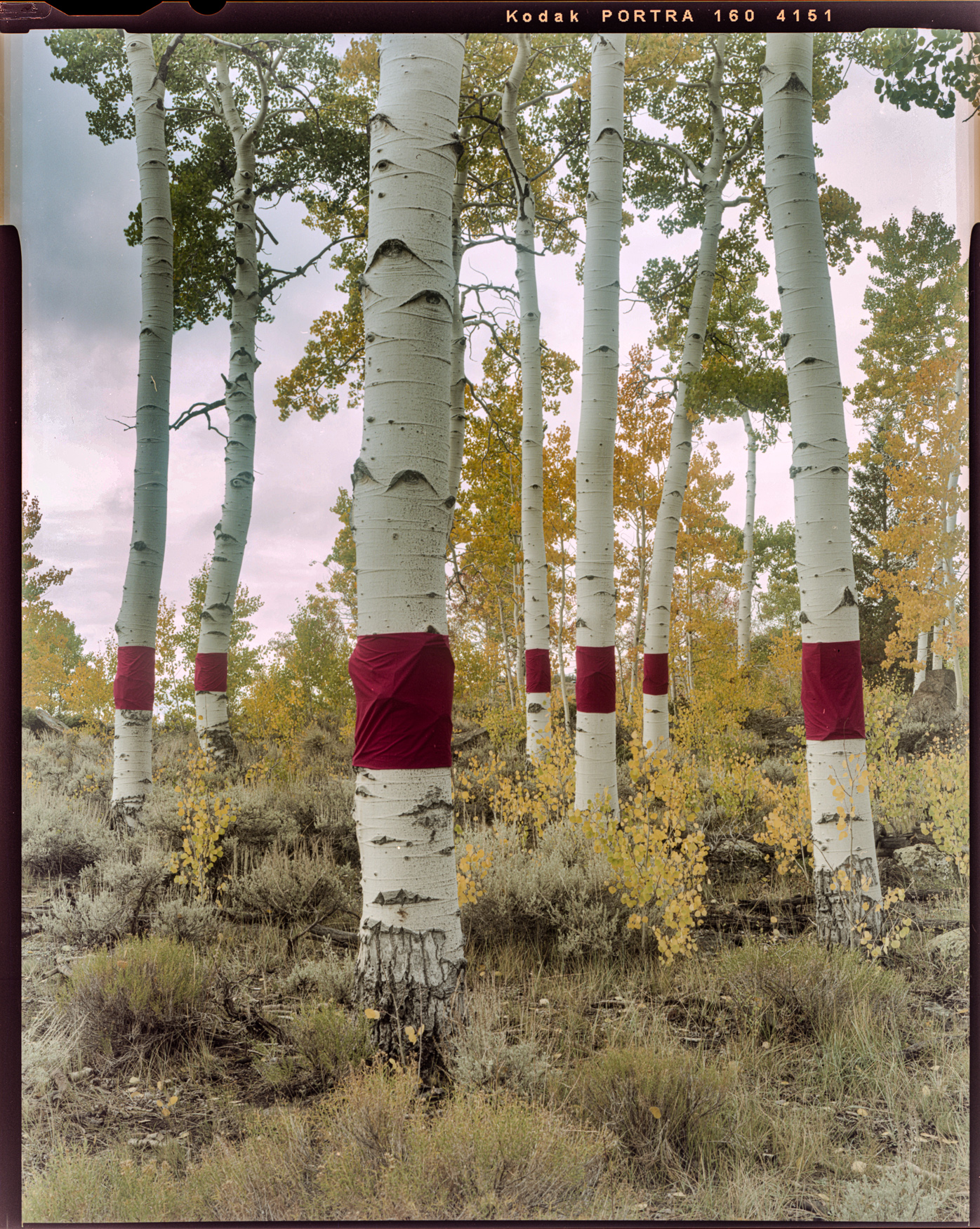
Pando : Red
Pando : Red
The Pando Tree
The spread of Pando was verified through genetic testing in 2008. To date, there is no aspen clone that has been verified to be as large. Specialists from the USDA Forest Service, scientists, Friends of Pando and volunteers have been studying and monitoring it.
Pando grows in Fishlake National Forest where thousands of other aspen clones grow, but it has received special attention. There were concerns about its regeneration, which prompted some experimental cutting and a programme of fencing – and the tree is now doing really well, with a greater rate of regeneration than surrounding aspen stems that are more vulnerable to grazing by deer and other animals.
While we were there, there was a celebration of the work done through the Pando Protection Project: a community effort that includes fencing, monitoring, 3D-mapping and ongoing study of the tree. This was a joyful day, when ecologists, ranchers, rangers and academics met with Lance Oditt and others from Friends of Pando to mark the work done so far. It turned out to be an intimate huddle under a gazebo to shelter from a hailstorm that decided to last just as long as the celebration. As the storm passed, Pando glowed.
There’s information about Pando and the work that is being done to map and care for the tree here: https://www.friendsofpando.org/thepandotree .
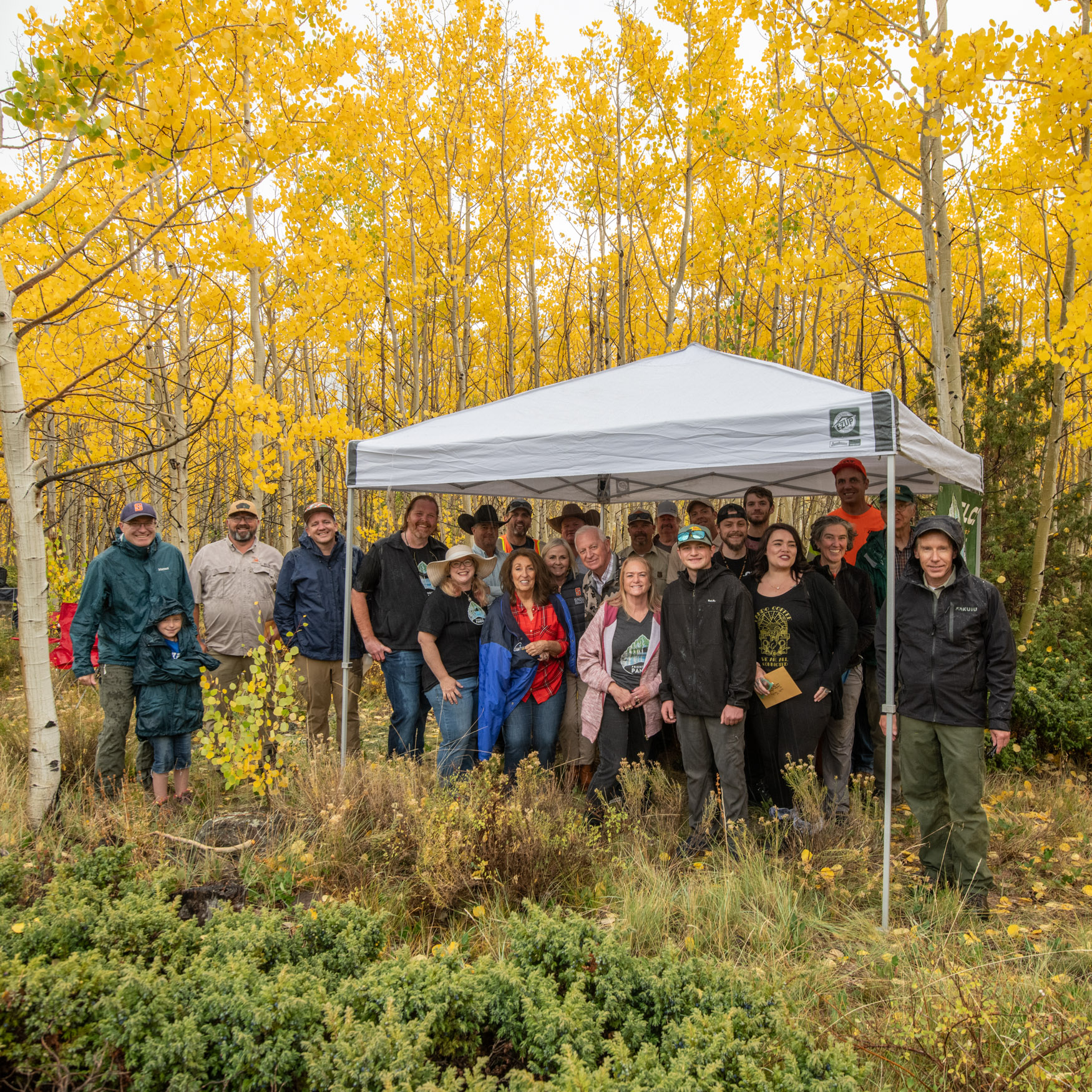
Pando Protection Plan celebration photo
Pando Protection Plan celebration photo
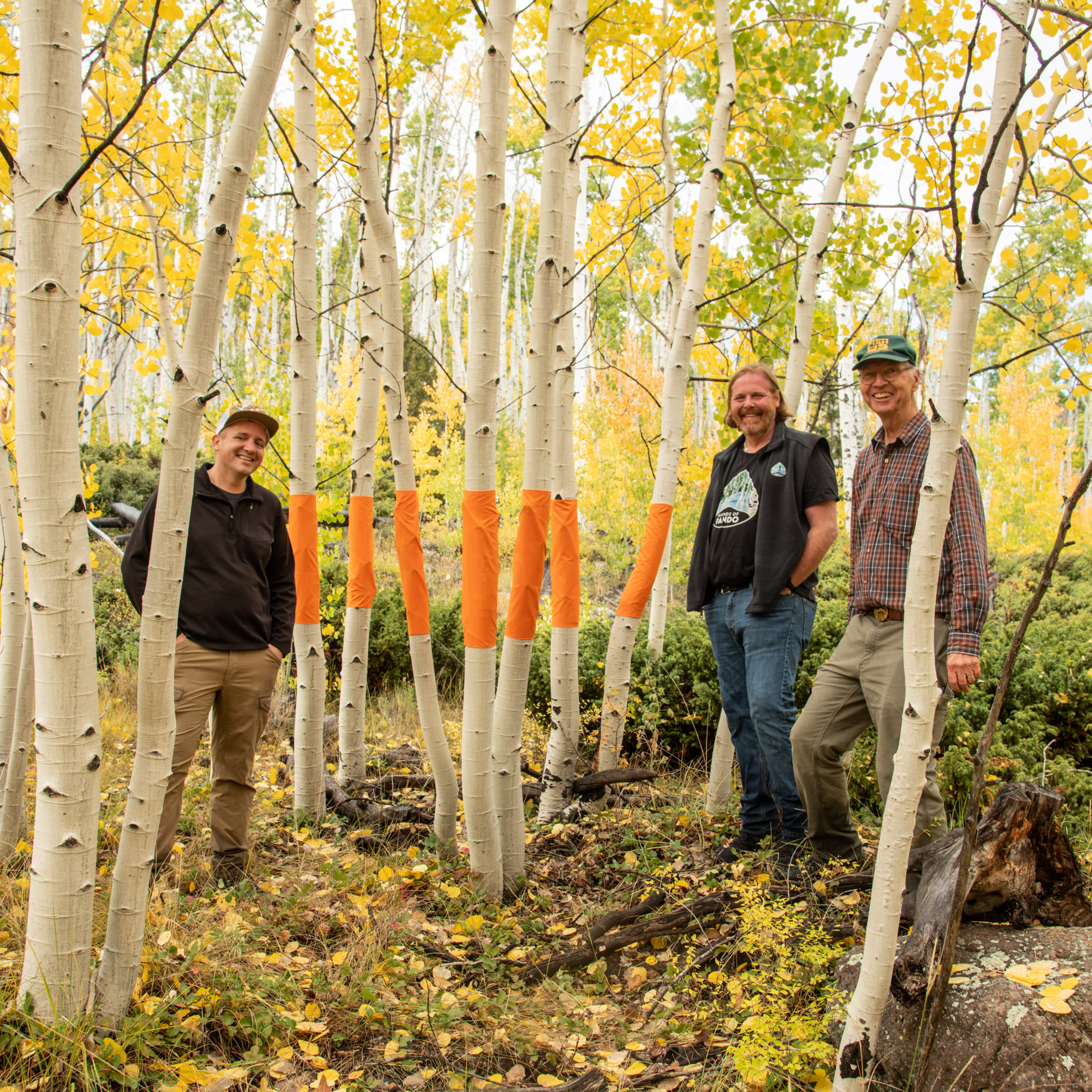
Pando: Orange with Lance Oditt, Nick Mustoe and Bob
Pando: Orange with Lance Oditt, Nick Mustoe and Bob
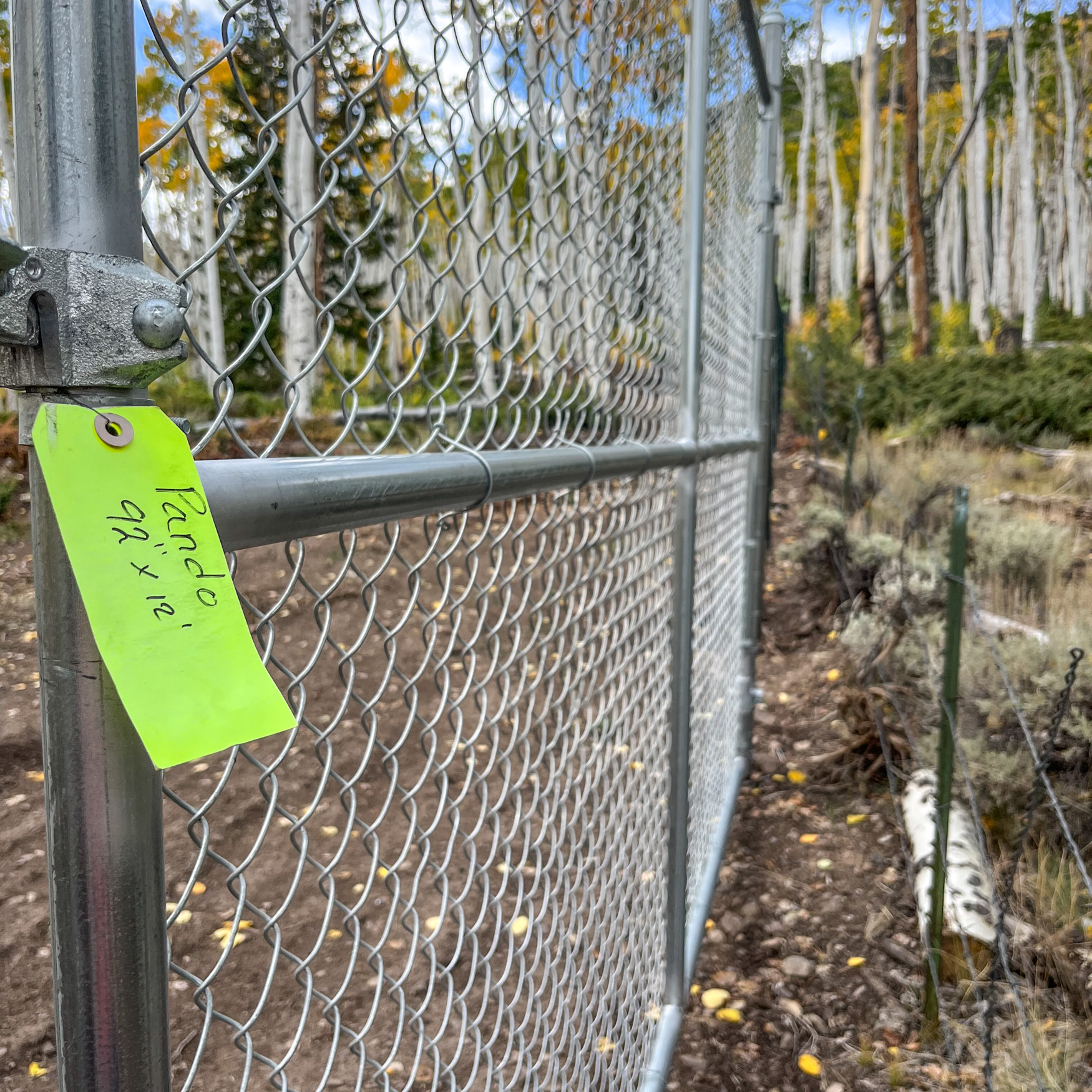
Pando fencing
Pando fencing
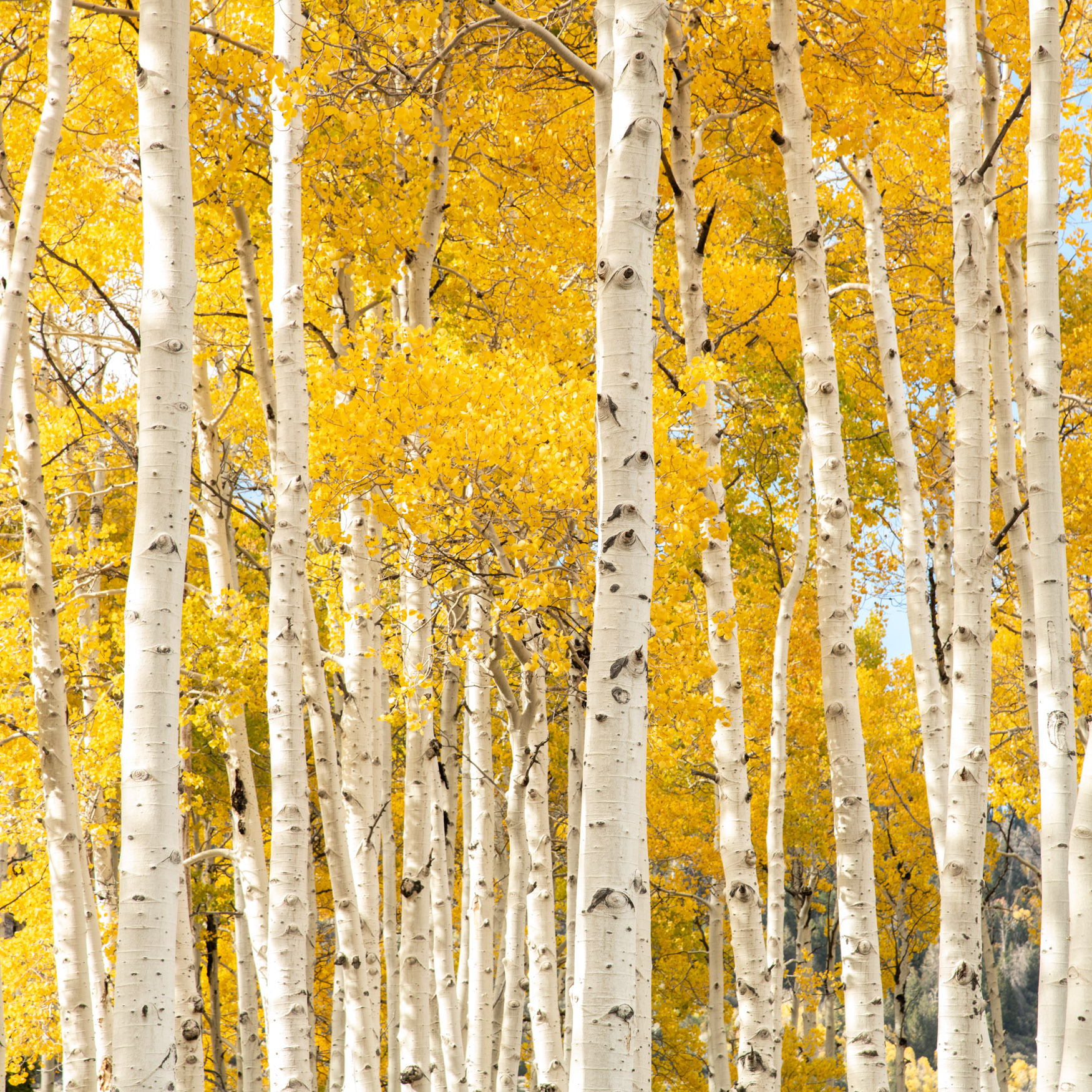
Pando, Autumn 2025
Pando, Autumn 2025
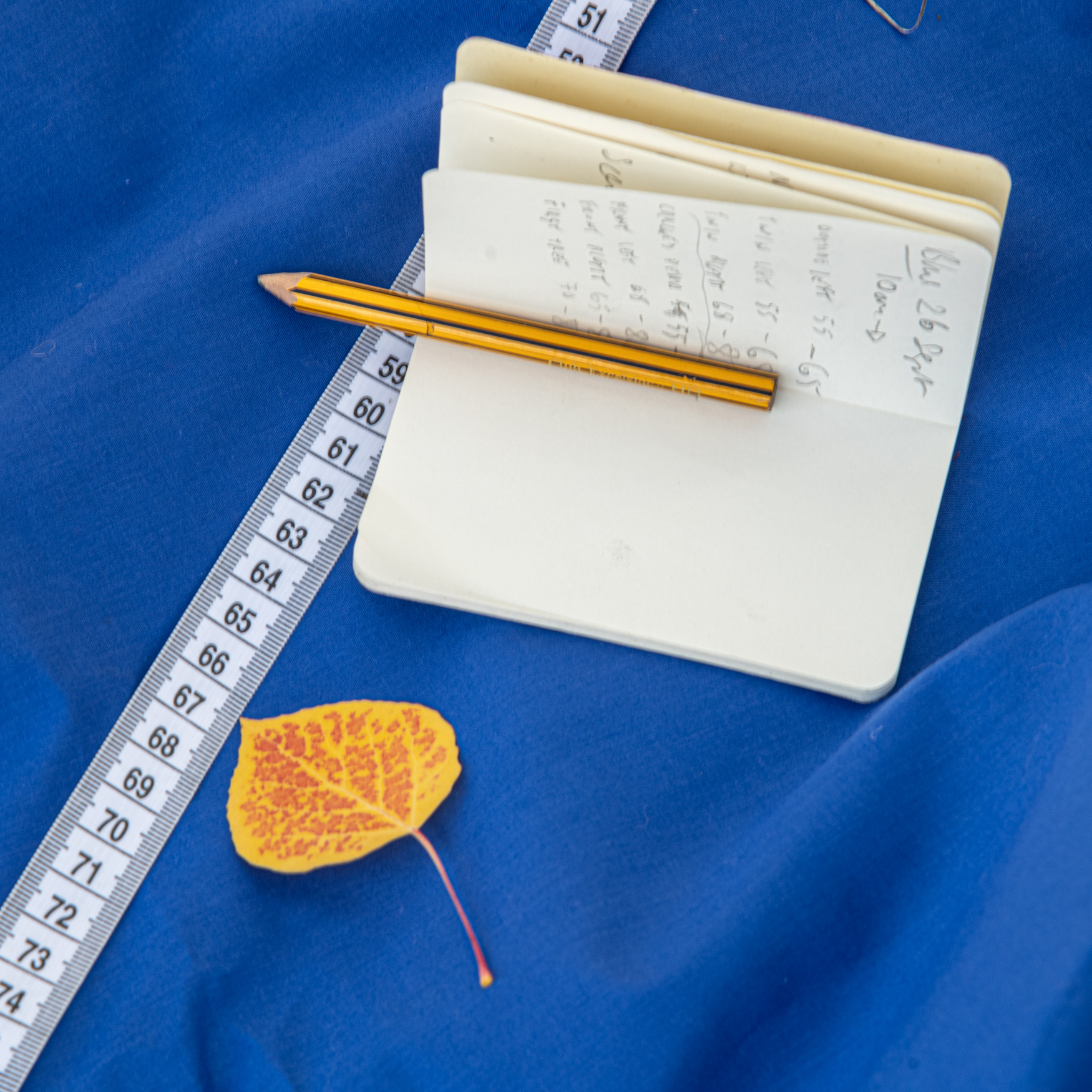
Pando : Blue, preparation
Pando : Blue, preparation
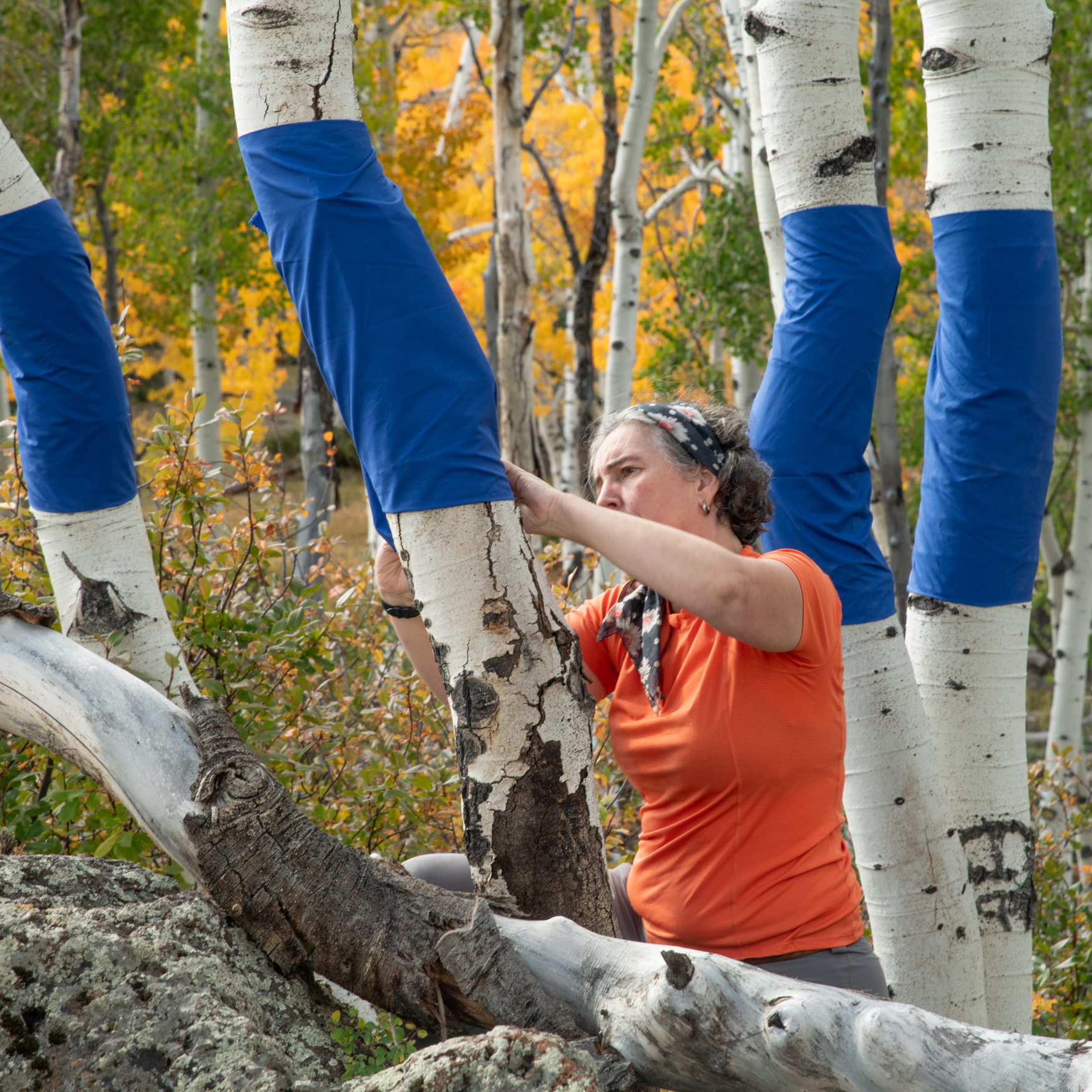
Pando : Blue installation
Pando : Blue installation
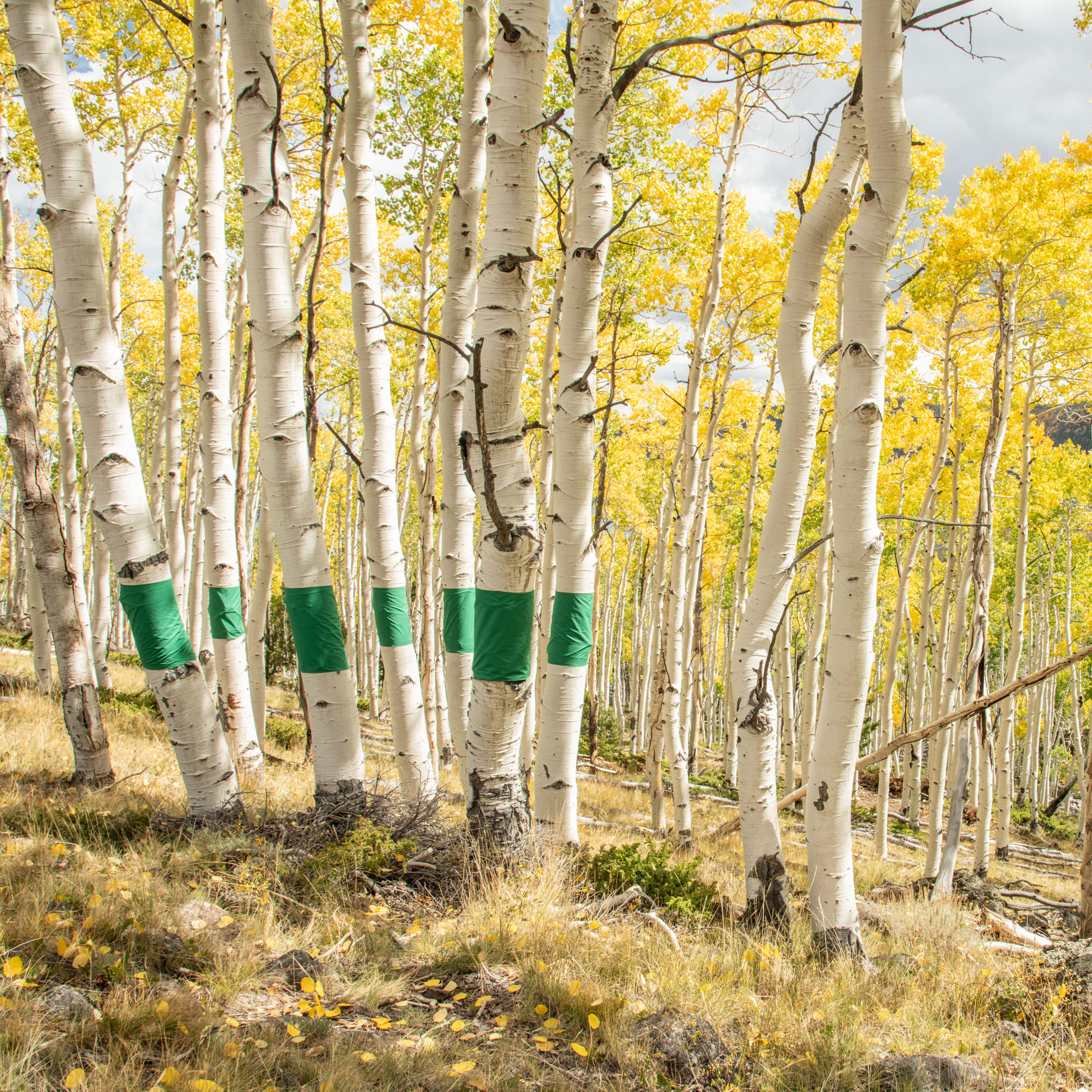
Pando: Green
Pando: Green
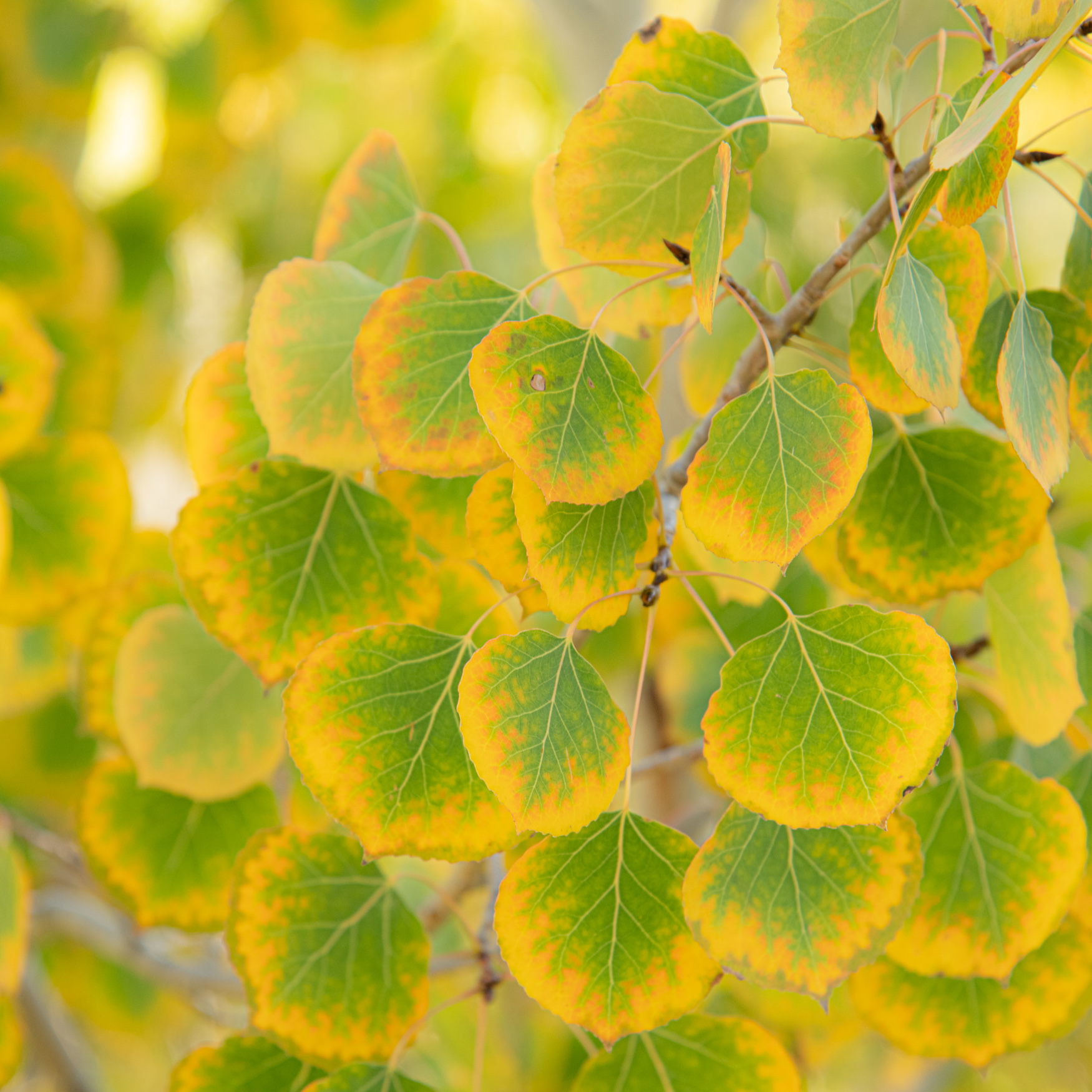
Pando leaves
Pando leaves
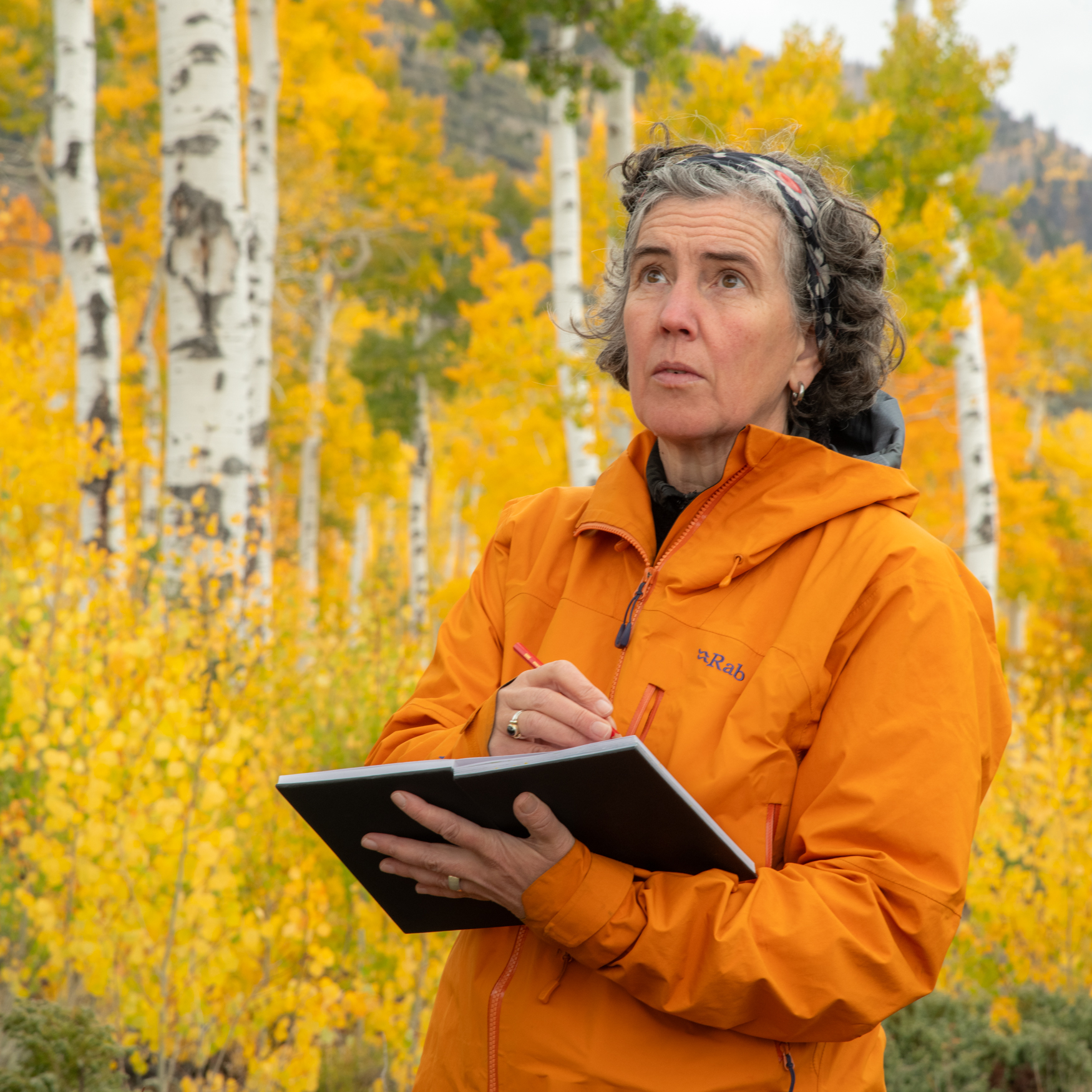
Harriet adding to her notes in the book she created especially for the residency..
Harriet adding to her notes in the book she created especially for the residency..
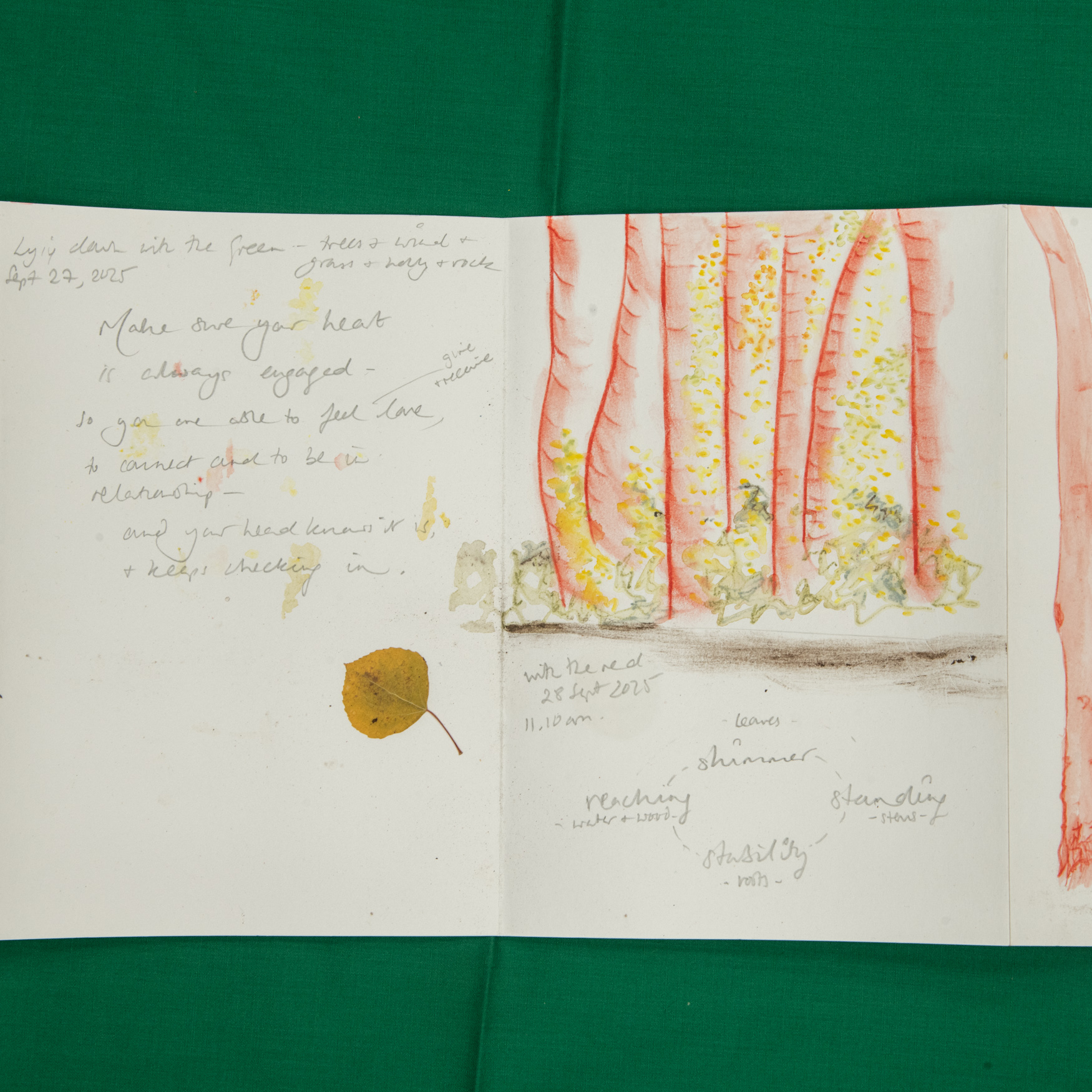
Pando notebook, detail
Pando notebook, detail
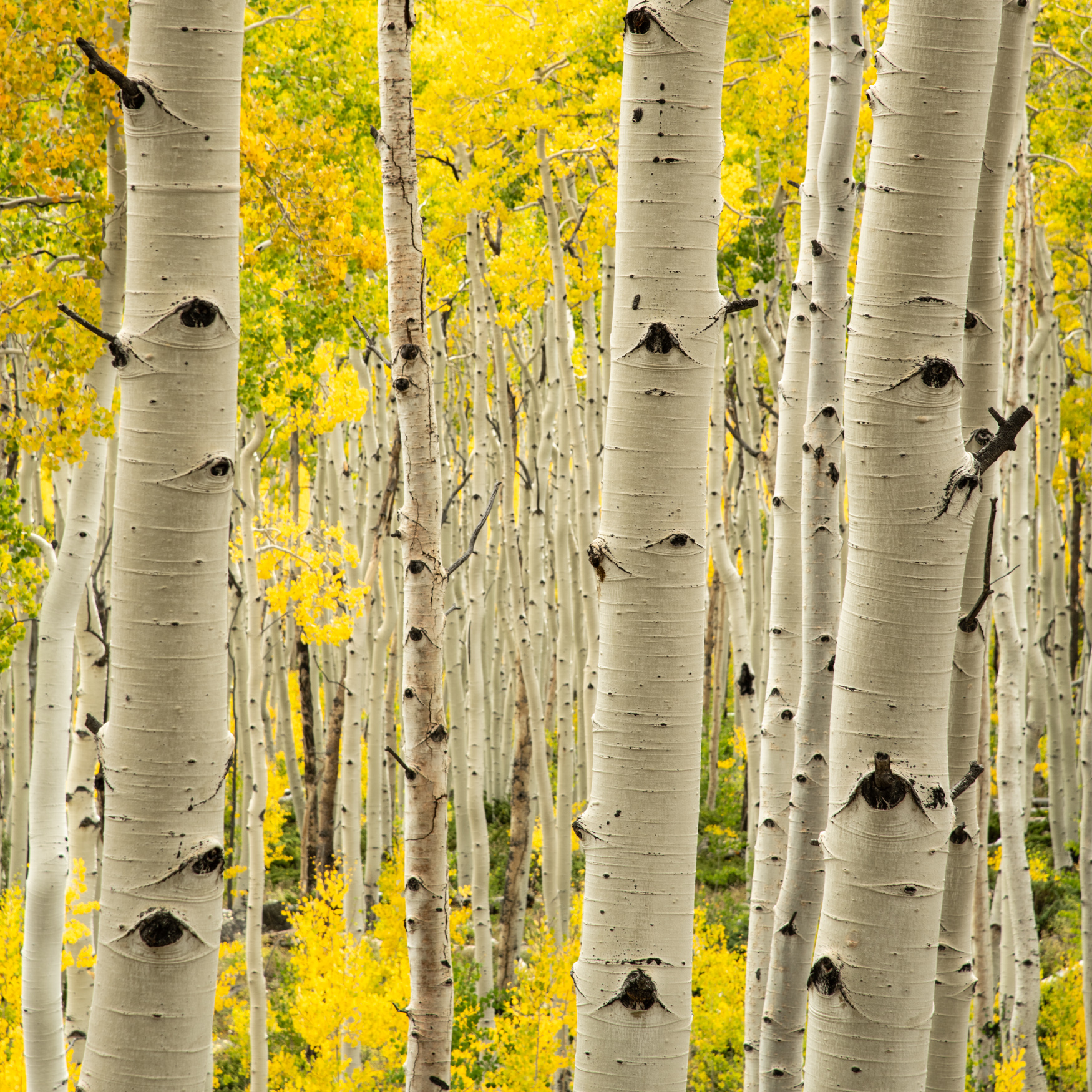
detail of Pando after a rainstorm
detail of Pando after a rainstorm
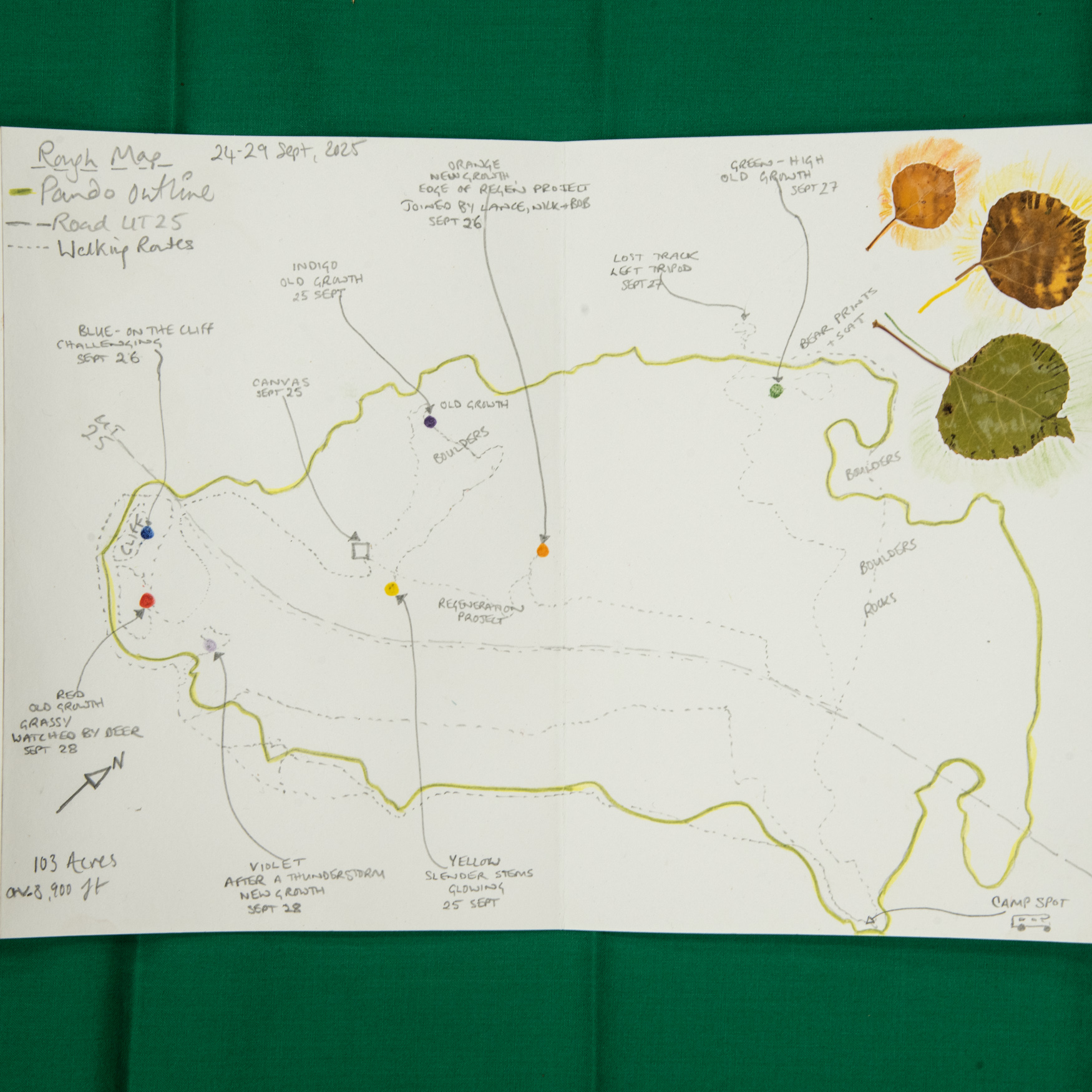
Pando map of installations and walks
Pando map of installations and walks
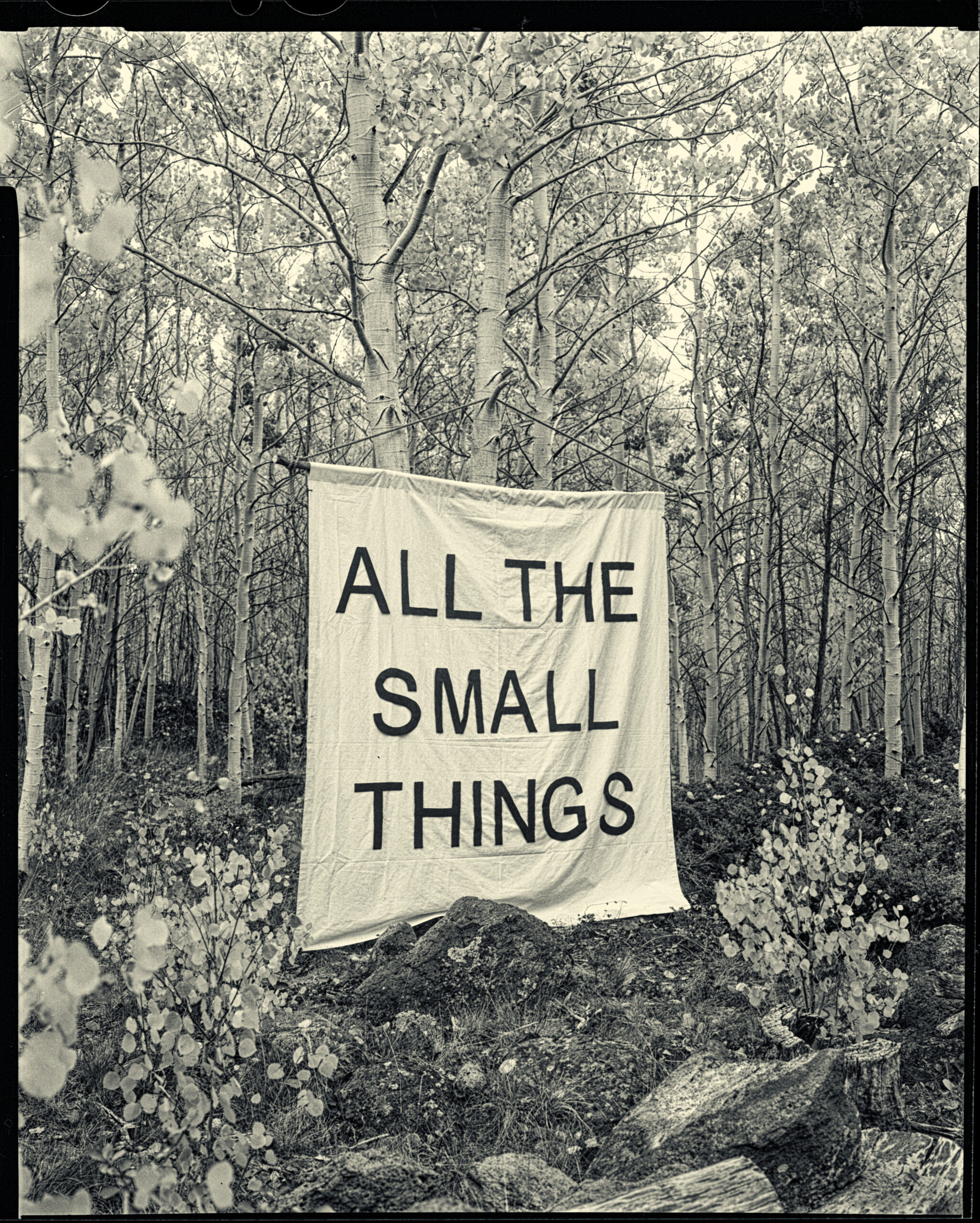
As well as the coloured cloth we also carried a 2.5 metre-square canvas to Pando. First used as part of the Sense of Here project in 2019, the canvas allows us to change the cloth words for each new context. We ‘pre-loaded’ the words before we left the UK (it’s quite challenging placing the letters onto the cloth in situ, and carrying the whole alphabet was a bit unrealistic!). We decided, though, that ALL THE SMALL THINGS was an apt phrase to be considering when taking in Pando. Once hung on one of the stems it remained in place for several hours whilst we waited for the light to change, and become just right for a large format photograph. Thankfully the winds were light and the rains held off.
Rob used his digital camera for general images, but his large format camera for this canvas shot, and for shots of the installations. Real film is sensitive: once the image is made, if the film is exposed to any light, the image will fog or disappear. Xray inspections at airports will also ruin it. So the films were carefully wrapped, and there were several conversations with the airport security staff! Getting the film back to the UK and developing it to see that the images were not lost was a huge relief.
What comes next
We are working on a series of paired images and words, which will be released in a limited edition handmade book. There’s also a little secret that we’re calling ‘One in a Billion’, and will reveal in time. The artworks will be shared with Friends of Pando in the first instance, and after that we’ll add them to this website. Watch this space!